Empowering Nurses for Peace and Innovation Across Borders
Rozana recently participated in the Alliance for Middle East Peace (ALLMEP) meetings in Ramallah and Jerusalem, where a significant study revealed that health is the most favourable area for continued cooperation between Palestinians and Israelis. This aligns with our observations in the field: health professionals from both communities are eager to move beyond dialogue to achieve tangible, positive outcomes together.
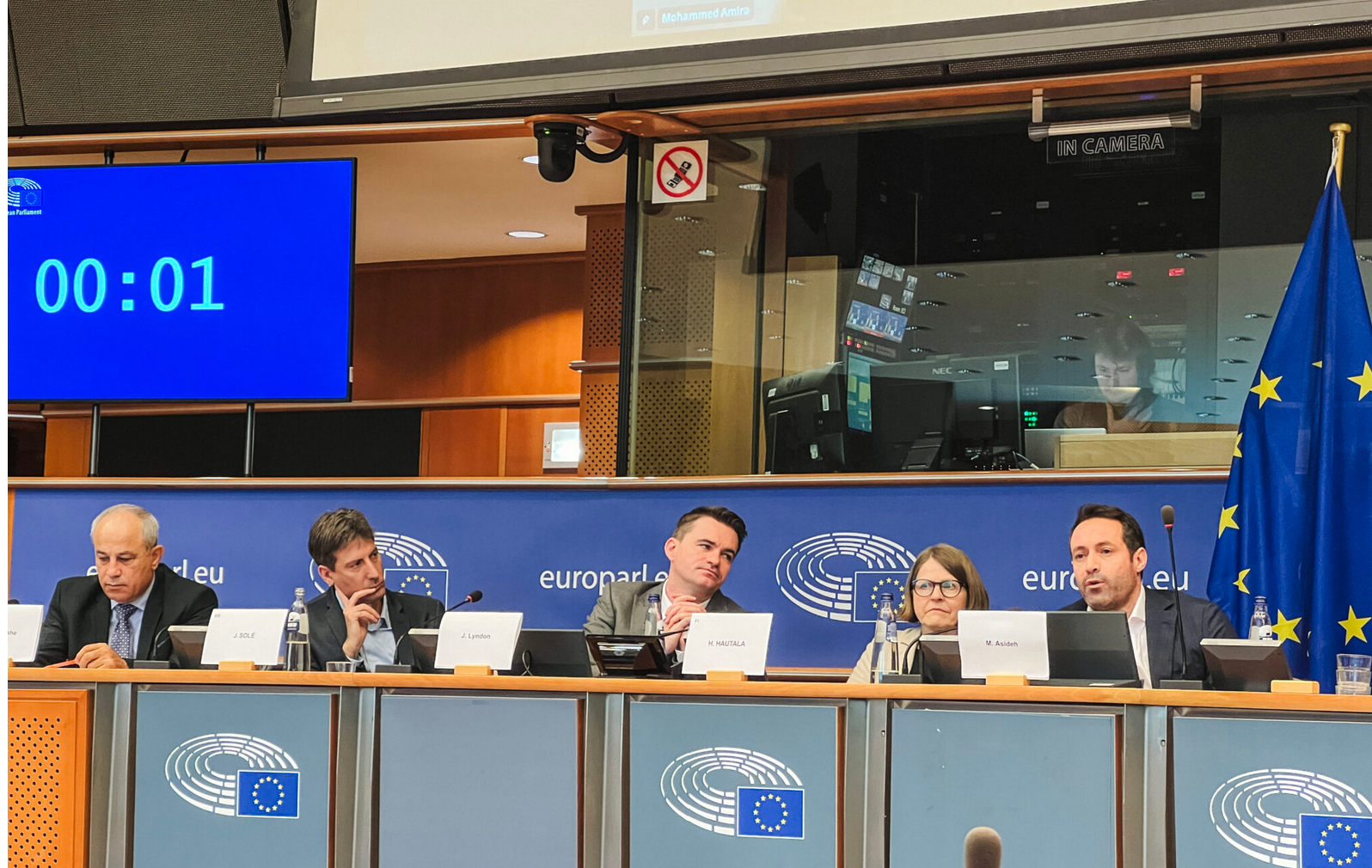
This quarter, our Director of Advocacy and Executive Director of Palestine, Mohammad Asideh, represented Rozana at several key international events. In Geneva, he attended a high-profile event co-hosted by B8 of Hope Principles for Peace (P4P) and the Swiss Foreign Ministry, fostering dialogue and collaboration between Israelis and Palestinians. In Brussels, he engaged with the EU parliament and commission to advocate for increased support for initiatives integrating peacebuilding with development. Additionally, Mohammad participated in a closed group discussion in Dublin focused on strengthening Palestinian institutions.
Our diplomatic engagement efforts have also been fruitful. Mohammad conducted several productive meetings with diplomatic missions in Ramallah, including representatives from Switzerland, the Netherlands, Italy, France, Australia, Japan, and Germany. These discussions are crucial for securing political support and funding for our initiatives, ensuring our continued impact.
As a key highlight of our capacity-building efforts, Mohammad recently met with representatives from the Palestinian Red Crescent Society Hospital Hebron (PRCS), a paediatric and obstetrics hospital, to discuss the development of their paediatric dialysis center. This center, which was under construction with authorization from the Palestinian Ministry of Health, will be the first paediatric dialysis center in the West Bank, equipped with seven beds ready for use. Rozana is committed to training the local medical team through our Palestinian-Israeli Professional Nursing Hub Project, showcasing yet another successful model of Palestinian healthcare capacity being achieved through the training of Palestinian health professionals in Israeli hospitals.
This training is crucial as it will significantly enhance local healthcare capabilities, ensuring that children receive the care they need close to home. Currently, children requiring dialysis must travel to Augusta Victoria Hospital or Shaare Zedek in Jerusalem, facing logistical challenges and the need for permits to cross into Israel, as well as the financial burden of such travel. Many of these patients are beneficiaries of our Wheels of Hope program, which helps mitigate some of these challenges.